

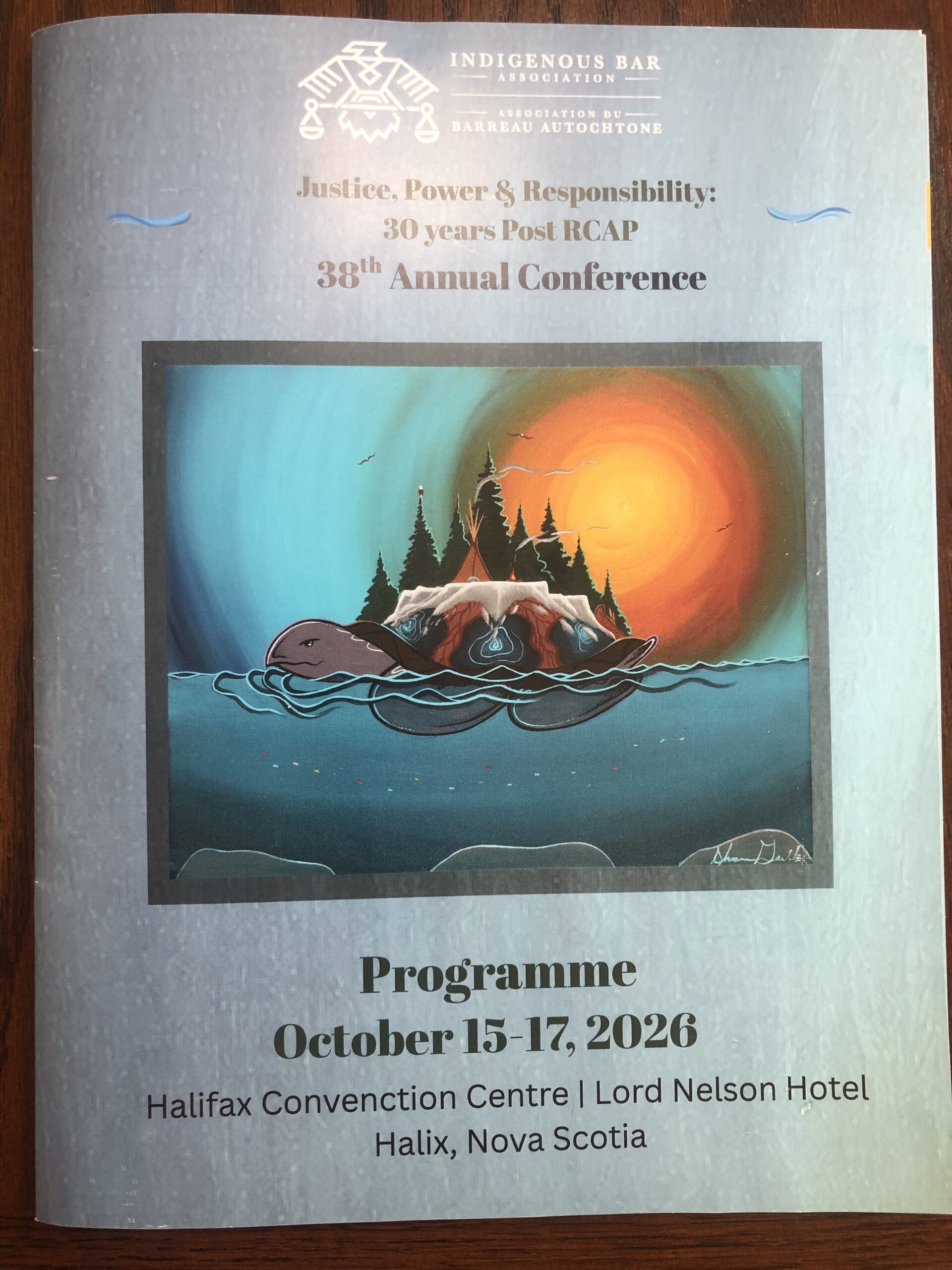
30 Years Post-RCAP
From October 15th-18th, I had the opportunity to attend the Indigenous Bar Association’s 38th annual conference in Kjipuktuk (Halifax), in Mi’kma’ki. I am very grateful to the hosts and organizers for putting on another great gathering with so many excellent speakers! I also enjoyed connecting with friends and colleagues old and new, and I am glad to see the continuing growth of the Indigenous bar.
This year’s conference theme was Justice, Power and Responsibility: 30 Years Post RCAP
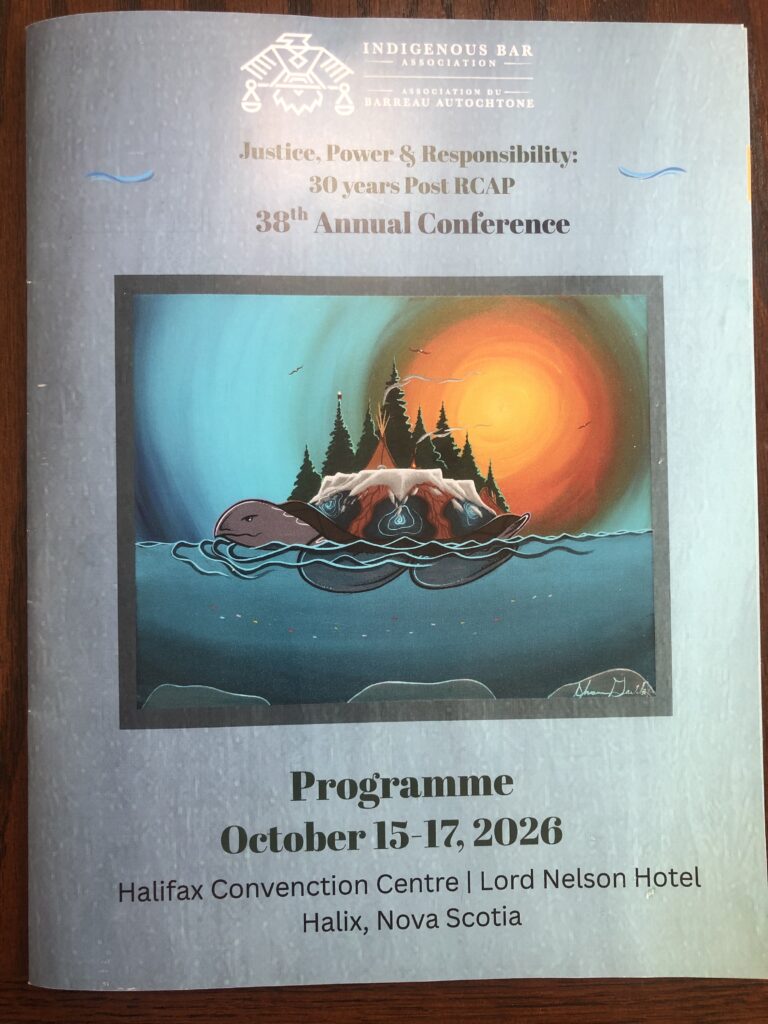
Senator Paul Prosper gave the opening keynote speech, exploring the trajectory of Indigenous resurgence since the 1990 Kanesatake Resistance at Oka, including the Royal Commission on Aboriginal Peoples, the Truth and Reconciliation Commission, the United Nations Declaration on the Rights of Indigenous Peoples, the National Inquiry into Missing and Murdered Indigenous Women and Girls, and more.
In a mirror of the opening, Sákéj Youngblood Henderson gave the closing keynote speech about thinking ahead for the next 30 years. He spoke of the cyclical rebirth of dormant language and law, animated by new and creative ideas.
These speeches were a good reminder of the bigger picture: we are in cycle of healing and growth, amidst great waves created by a storm of colonial unwellness. Each wave causes pain and setbacks – but with every wave, we add to our growing bundle of medicine: research, testimony, relationships, experience, skill, new ways of doing things and new paths forward. This medicine has tremendous power, borne from many generations of immense work and sacrifice. This medicine is also like the sun and the moon – it always returns, and can break the storm and turn the tide.
30 Minutes Post-Referendum
Shortly after I returned from the conference to Alberta, the vote took place for the 2026 Referendum, which included a question on whether Alberta should take steps to secede from Canada.
Much has already been said about how the separation question was a blatant attack on the Treaties, and how the other referendum questions were fundamentally racist and anti-constitutional. The Referendum process from start to finish was another destructive wave caused by the storm of colonial unwellness.
However, the cycle of Indigenous resurgence revealed itself once more as well.
I am immensely proud of Indigenous nations in Alberta for demonstrating their exceptional courage and leadership in standing against separatism in favour of constitutionalism and the rule of law. Indigenous people across the province turned out to vote in record numbers and truly demonstrated what it means to live the Treaties. The collective strength of Indigenous peoples, rooted in relationships and shared experience, has grown a new layer. And new strength will lead to new opportunity.
Reflections
The storm of colonial unwellness goes on, and there will be more – and worse – waves to come. But there will also be resistance, collective gathering of strength, and new additions to the medicine bundle. Together, we can look forward to the growth more proactively and with stronger footing.
Colonial unwellness makes waves – Indigenous healing turns tides.
Zachary Biech, BA (Hons), JD
zacharybiech@biechlaw.ca